Why Export Buyers Stop Replying After Visiting Your Website
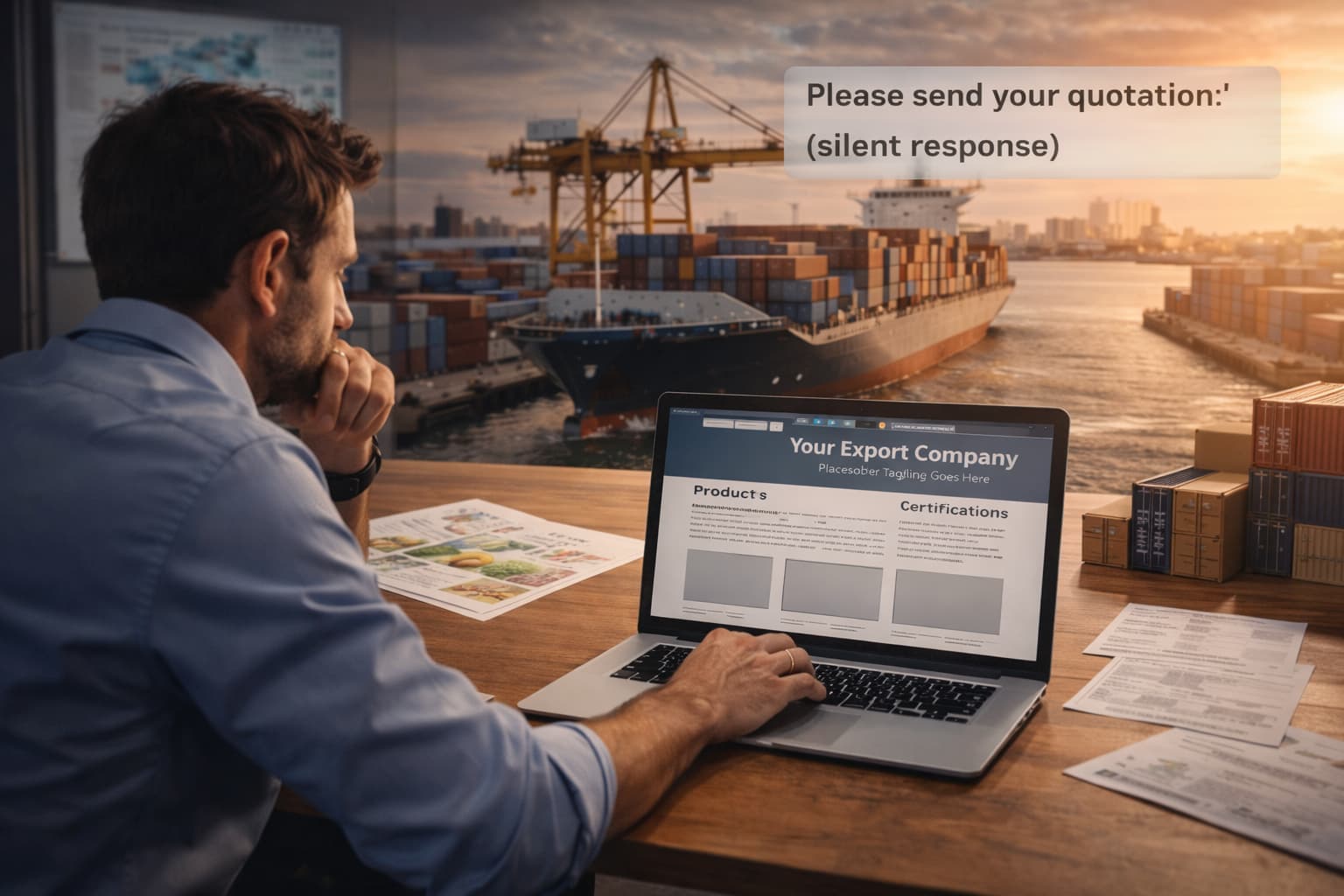
Many exporters lose international enquiries without ever knowing why. In most cases, the decision is made quietly—online—before a conversation begins.
Sources:
- GartnerB2B buyers research suppliers extensively before contacting them
- Stanford Web Credibility ProjectWebsite credibility is a key factor in supplier trust decisions
The silent reason export enquiries disappear
Export businesses often assume that when buyers stop replying, the issue is pricing, timing, or logistics. In reality, the decision is usually made much earlier. Before an international buyer replies, requests samples, or schedules a call, they assess one thing quietly: *Can this supplier be trusted?* That assessment increasingly happens online. If the website feels unclear, outdated, or incomplete, buyers do not negotiate. They simply move on.
Why trust matters more than competitiveness in exports
Export buyers are risk-focused. Their primary concern is not whether a supplier is the cheapest, but whether the supplier is reliable. They look for signs of legitimacy: certifications, clarity, process transparency, and professionalism. A weak website introduces doubt even before the first email exchange. Once doubt forms, no amount of follow-up corrects it.
How global buyers evaluate exporters online
Buyers rarely explain why they shortlist one exporter over another, but their behavior follows patterns. They scan for: • Clear product categories and specifications • Export certifications and compliance • Operational clarity and process explanation • Consistent branding and communication When these elements are missing or scattered, buyers assume risk—even if the business itself is capable.
What a strong exporter website actually communicates
A strong exporter website does not exaggerate scale. It communicates capability. It explains what the business does, how it operates, and what standards it follows—without overstatement. It reassures buyers that this is a stable, process-driven organization. Most importantly, it answers questions buyers never ask directly: Who are you? How do you operate? Can I rely on you long-term?
Why exporters lose silently and repeatedly
The most damaging part of weak digital credibility is that it produces no feedback. Buyers don’t complain. They don’t negotiate. They don’t explain why they stopped responding. The website becomes a filter—not to approve, but to quietly eliminate. Over time, exporters normalize this loss without realizing its cause.
Where exporter websites most commonly fail
Most exporter websites don’t fail because they look bad. They fail because they feel uncertain. Common issues include: • Certifications mentioned but not clearly explained • Generic language that avoids specifics • Important information buried or missing • No clear sense of operational scale or process Internally, these feel minor. Externally, they introduce hesitation.
What changes when credibility is established early
When a website clearly communicates legitimacy, the sales dynamic shifts. Enquiries become more serious. Conversations start faster. Buyers arrive pre-qualified. The website stops acting as a brochure and starts functioning as a credibility layer—working quietly before any call takes place.
Reducing risk before the first conversation
For exporters and manufacturers, a website has one primary role: reduce perceived risk. This requires clarity, structure, and restraint—not marketing noise. When done correctly, buyers don’t feel convinced. They feel safe proceeding.
Ready to convert niche traffic into booked calls?
 Let's talk about your project!